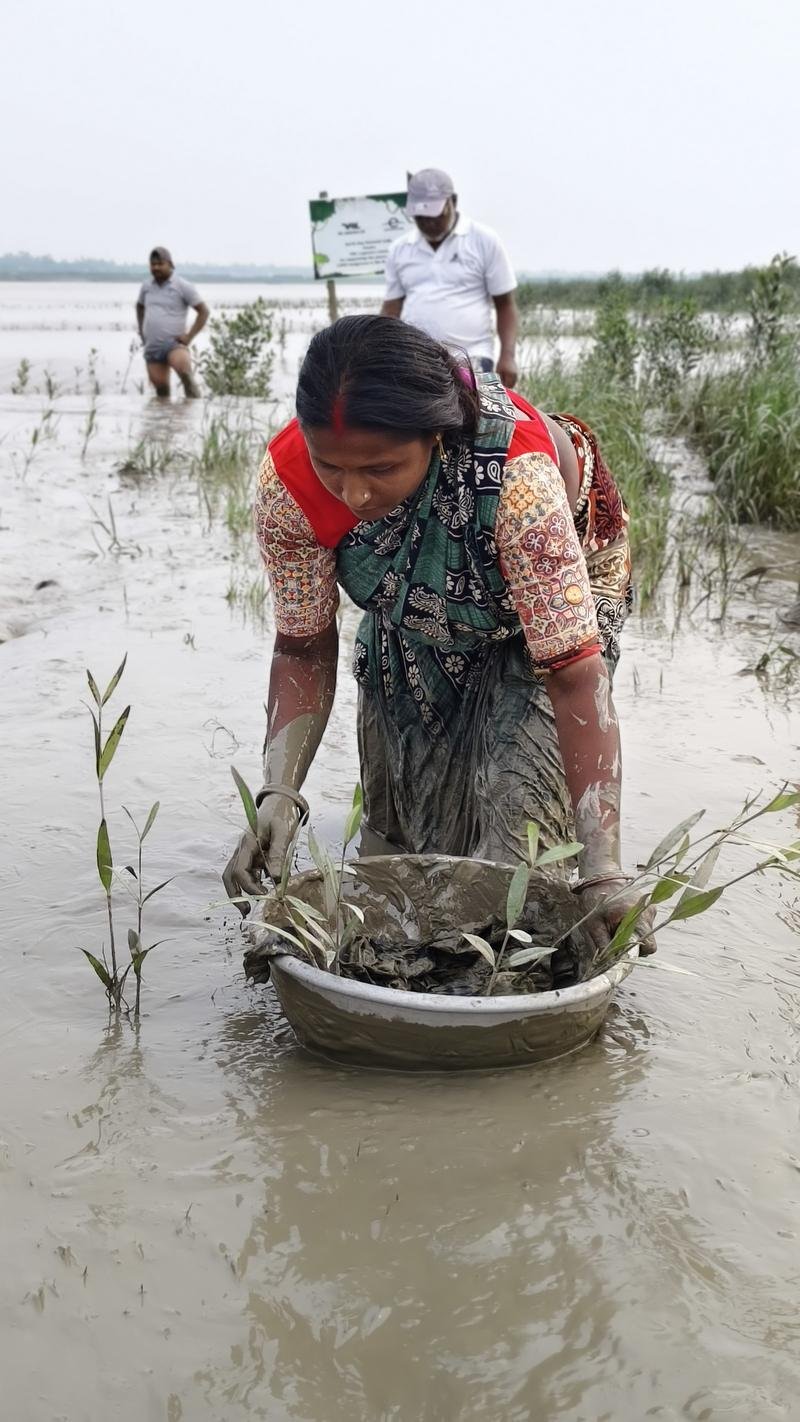
Women planting mangrove saplings on a river bank — Earth Day Network India programmes, green initiatives India

Action For Our Planet

Our key initiatives turn global environmental priorities into active local solutions for people across India.

Overview

Turning Global Priorities into Action in India

Our programmes reflect global Earth Day themes while responding to India's environmental priorities and diverse social realities.

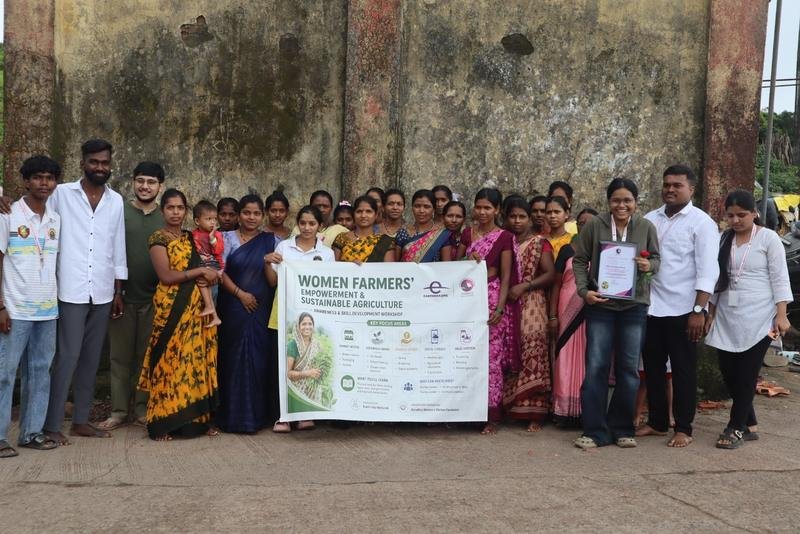
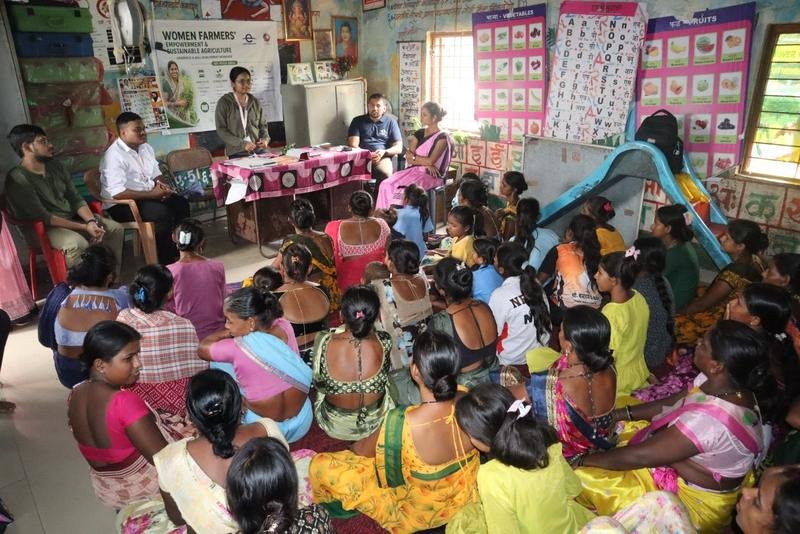
Women farmers at a Women Farmers for Earth training — sustainable food and agriculture

Sustainable Food and Agriculture

Aligned with the global Earth Day theme for 2027 and 2028, Food for Our Planet—Healthy People, Healthy Soils, Healthy Futures, Farmers for Earth connects farmers and Farmer Producer Organisations with experts, climate-resilient agricultural practices, financial opportunities and knowledge-sharing networks. First-Generation Women Farmers for Earth equips women managing family farms with practical knowledge of natural inputs, multi-cropping, financial management, government schemes, collective marketing, negotiation and post-harvest management.

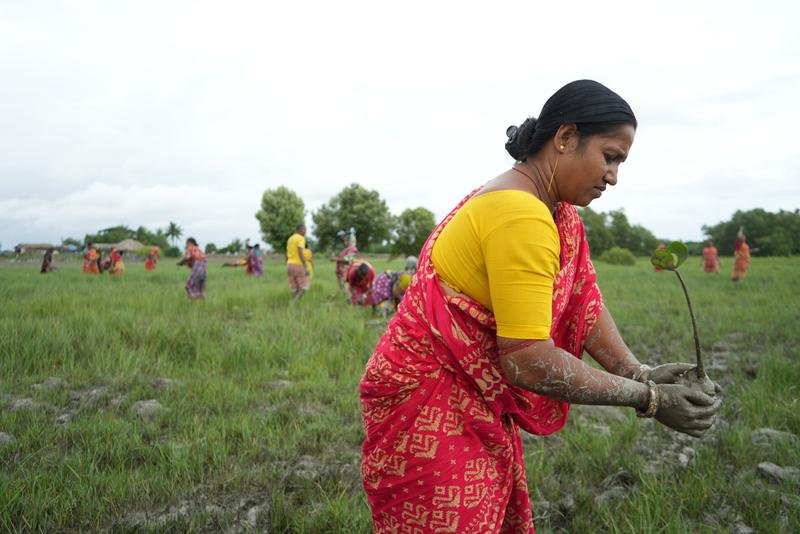
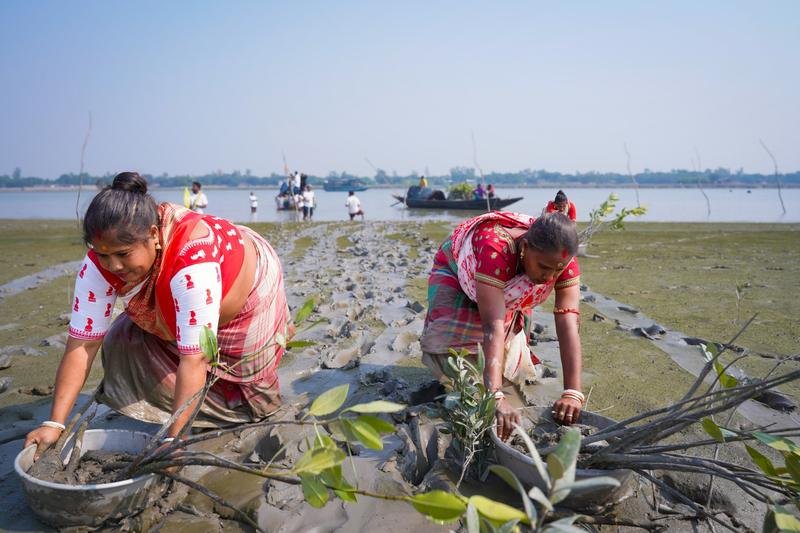
Woman planting a mangrove sapling — The Canopy Project, tree planting in India

The Canopy Project™

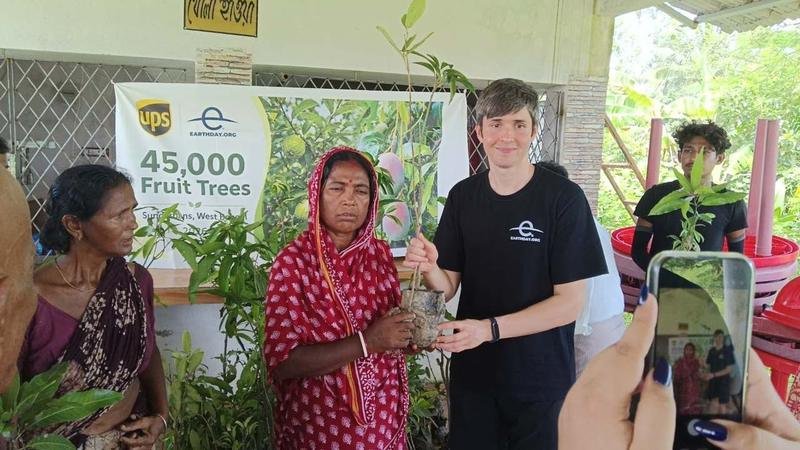
Through The Canopy Project™, we have planted more than 3.6 million saplings across India over the last decade, advancing afforestation, reforestation, agroforestry and large-scale mangrove restoration. Across our projects, women and local communities play a central role in planting and long-term tree care—reviving biodiversity, strengthening climate resilience and turning ecological restoration into lasting community opportunity.

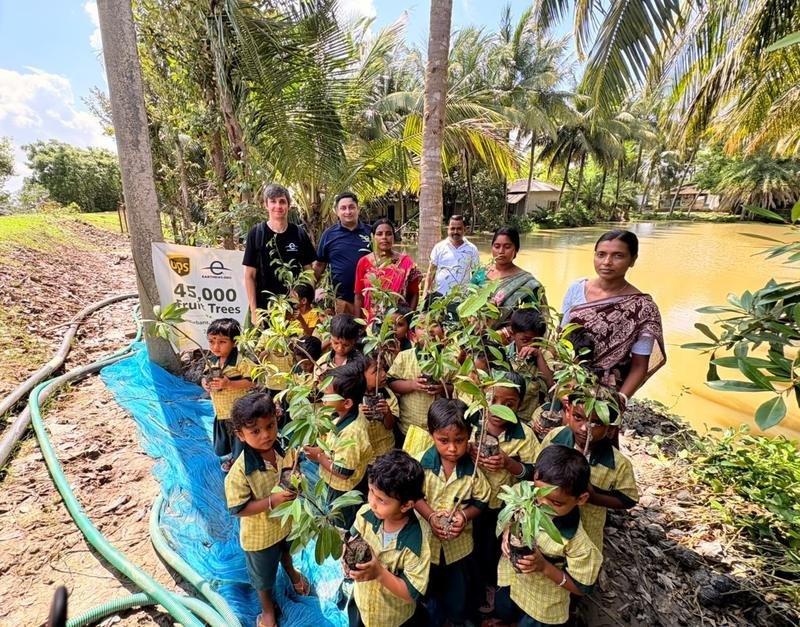
We regularly gift fruit-tree saplings to environmentally and economically vulnerable communities. These include Saklana village in Tehri Garhwal, where landslides destroyed extensive orchards; water-scarce Lalitpur in Bundelkhand; and Anantapur in Andhra Pradesh, one of India's most chronically drought-prone districts. The mature trees help families improve nutrition, build future income sources, and restore degraded land.

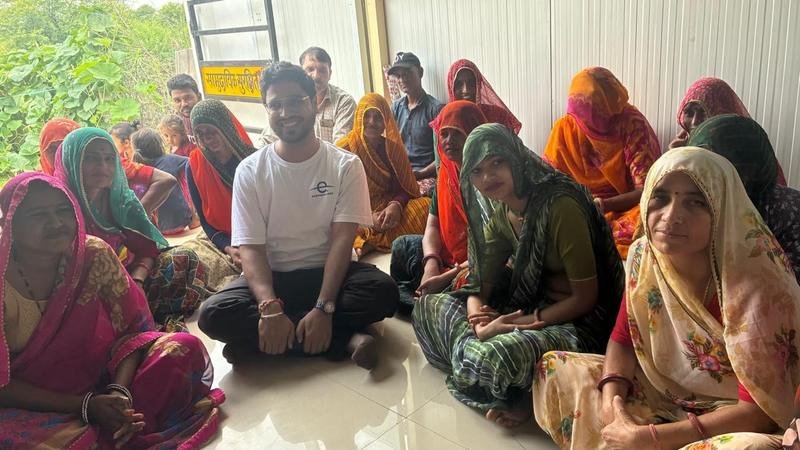
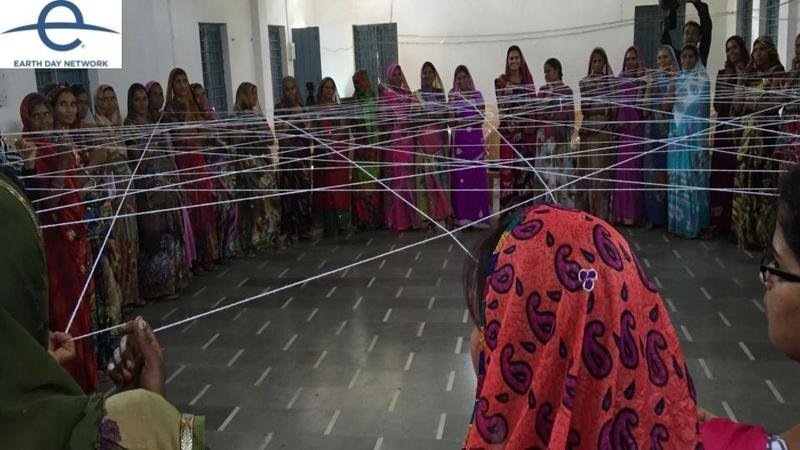
Healthy Energy session for rural women in Rajasthan — clean energy and climate-resilient communities in India

Clean Energy and Climate-Resilient Communities

Our Healthy Energy programme promotes cleaner energy and practical low-carbon choices that can improve household health, reduce expenditure and protect the environment. It has engaged more than 20,000 rural women across 15 states to increase awareness of the health, financial, and environmental costs of greenhouse gas-emitting fuels.

A dedicated strand works with women panchayat leaders. Using rural communication strategies such as street theatre, traditional songs, and heritage art forms, we help them understand the benefits of helping their constituents reduce dependence on greenhouse gas-emitting fuels, identify locally appropriate clean-energy solutions, and connect with potential government, institutional, and other funding sources.

In partnership with the Energy Swaraj Foundation, we advance energy literacy and encourage energy conservation, responsible consumption and the transition to renewable energy. 8,50,000 persons have completed its Energy Literacy Training programme.

The Foundation's founder and our Advisor, Professor Chetan Singh Solanki, has alone travelled more than 68,000 kilometres, delivered over 1,600 talks and engaged approximately 4,00,000 citizens through the Energy Swaraj Yatra.

Through institutional engagement and our Star Campus Awards, we also recognise educational institutions that translate energy awareness into measurable action by conserving energy, adopting renewable solutions and advancing towards low-carbon campuses.

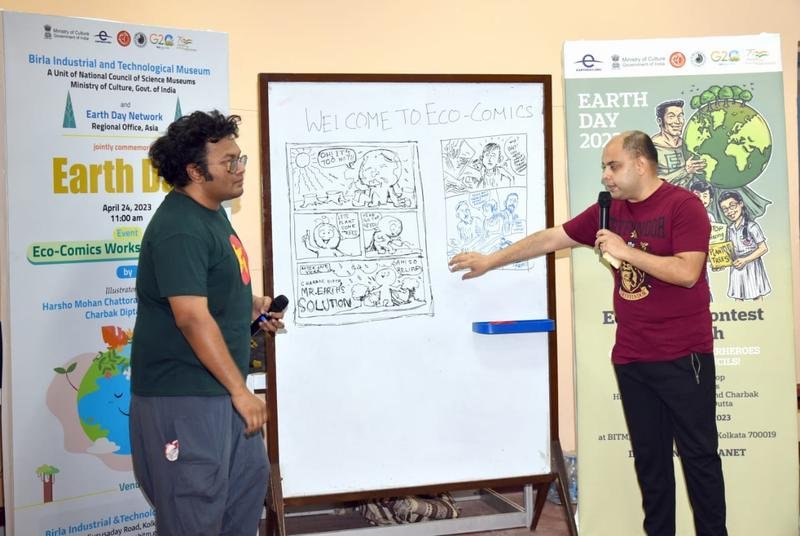
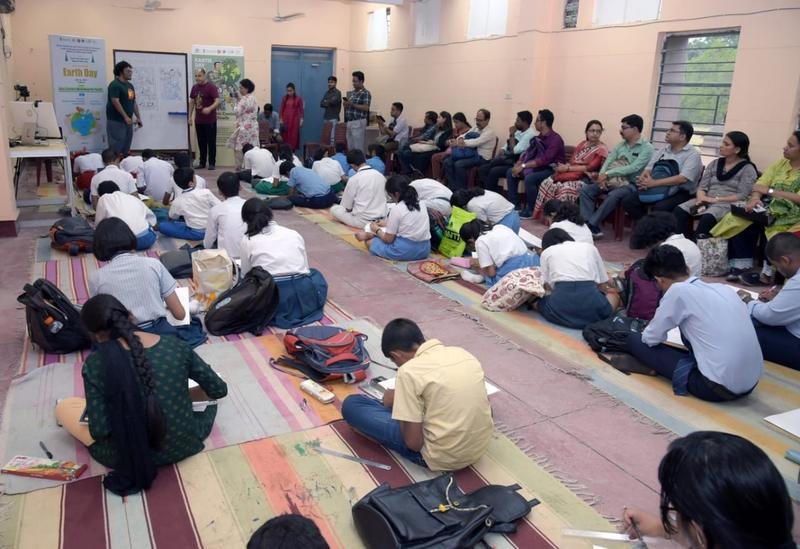
Eco-Comics workshop with students — environmental and climate education India

Environmental and Climate Education

Environmental and climate literacy are central to our work. From the early school years, our programmes help students understand environmental challenges, think critically, make informed choices, and participate in solutions.

Our student initiatives transform environmental learning into creative action. Morning Assembly invites students to present original Earth Day activities through theatre, debate, poetry, music, demonstrations, folk traditions and technology. Shared with approximately 1,00,000 schools annually, it encourages participation across government, private, rural, urban and international schools.

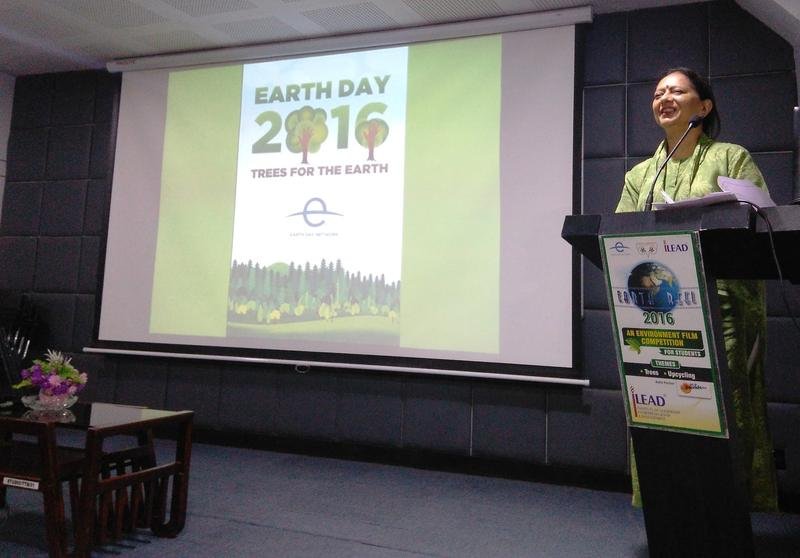
Earth Reel enables students to research environmental issues, develop screenplays and communicate their findings through films in English and regional languages. Earth Murals turns school walls and shared spaces into powerful visual messages for the planet.

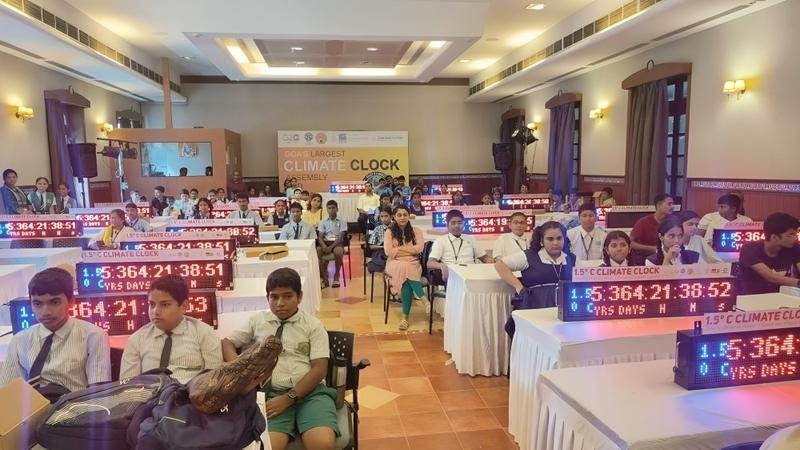
Climate Clock assemblies enable students to assemble and display clocks in their institutions that count down the critical time remaining to prevent irreversible climate change, making the urgency for action visible.

Eco-Comics workshops, led by some of India's best-known cartoonists, teach students to communicate complex environmental issues and solutions through engaging illustrated stories.

We also support educators with practical approaches that make learning engaging, actionable and relevant to local realities. Through teacher-training workshops, educators learn to integrate climate and environmental concepts across subjects using interactive methods, creative activities and locally relevant examples. Our adaptable learning resources support different age groups, subjects and learning environments.

Together, these programmes help students progress from climate learning to creativity, action and environmental leadership.

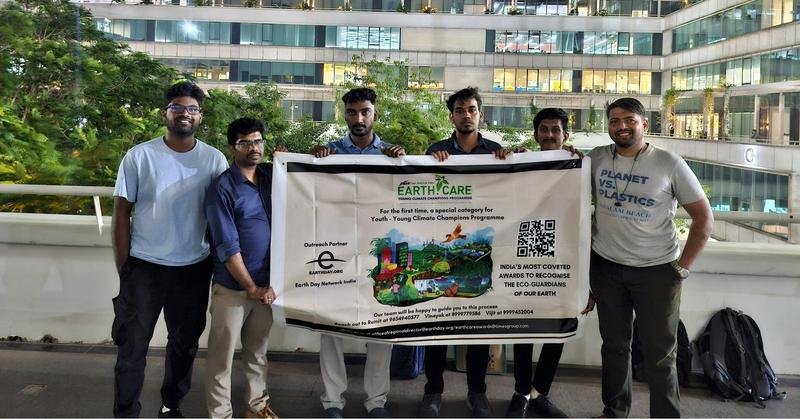
Students at the Earth Care Awards Young Climate Champions programme — Empowering Youth

Empowering Youth

India has the world's largest youth population, with more than 382 million young people. Our initiatives aim to share climate knowledge with youth and showcase opportunities to be innovators, advocates, and community leaders in the green economy.

Young Climate Champions, part of the JSW–The Times of India Earth Care Awards, encourages college students to develop practical, innovative, and scalable solutions to environmental challenges. In 2025–26, the programme reached nearly 4,50,000 youth in colleges and institutions of academic excellence across India.

My Future My Voice

Launched in India in 2020, our My Future My Voice initiative identifies and invites accomplished young environmental leaders to serve as Youth Ambassadors. Today, this growing global network includes over 300 Youth Ambassadors from 125 countries. Many have earned prestigious honours—including the Diana Award, Queen's Young Leaders Award and Indira Gandhi Award—and represented their countries at major United Nations forums and global climate conferences. Through expert-led dialogues, international exposure and cross-border collaboration, they share proven solutions, forge global connections and advance environmental action worldwide.

Young Earthpreneurs Awards

Launched in 2022, the Young Earthpreneurs Awards identify and nurture promising environmental ideas from college students and recent graduates. Through recognition, expert mentoring and wider visibility, participants refine solutions that protect natural resources while creating livelihoods and green economic opportunities. Several awardees have since transformed their ideas into startups—taking their innovations beyond the competition and into the marketplace.

Together, these initiatives help young people move from climate literacy to innovation, leadership and action.

Youth Innovation and Green Livelihoods

Through our Rising Stars, Young Earthpreneurs and other youth platforms, we identify, mentor and recognise young environmental leaders and innovators. Participants receive expert guidance, opportunities to showcase their work and support in developing viable green-enterprise ideas.

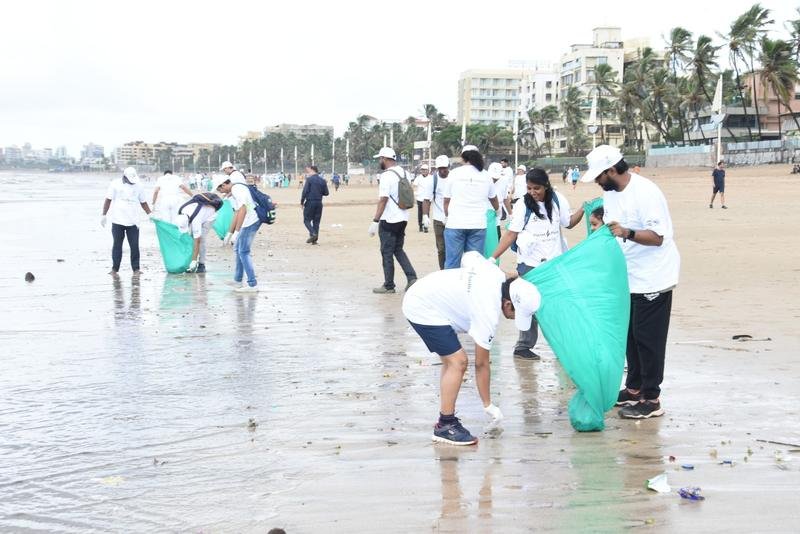
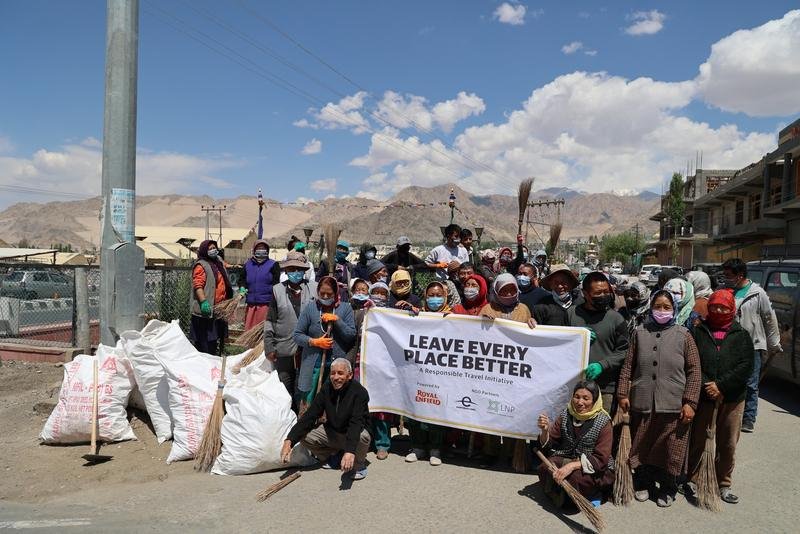
Volunteers clearing waste from a beach — The Great Global Cleanup and plastic reduction in India

Cleanups and Circularity

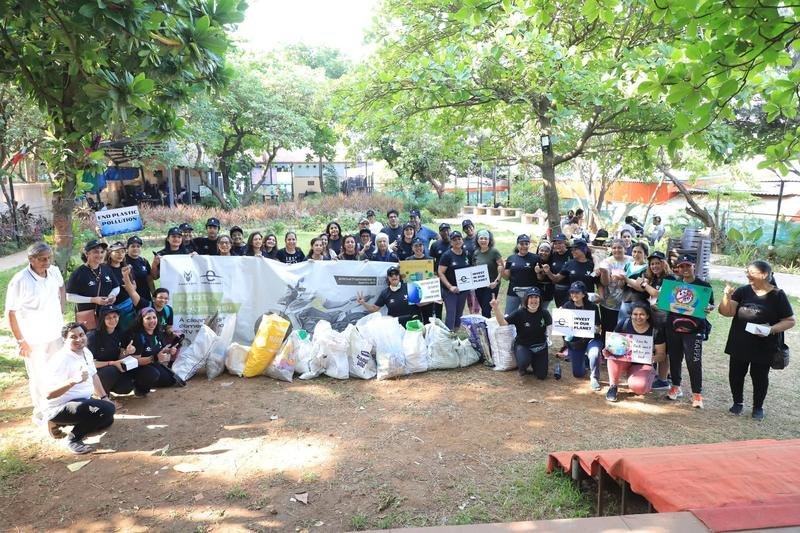
Through The Great Global Cleanup®, we mobilise volunteers and partners to remove waste from beaches, rivers, lakes, neighbourhoods and other shared spaces—including along the Ganga from Devprayag to Ganga Sagar, Mumbai's Juhu Beach, Dal Lake and other locations across India.

Our work goes beyond cleanups. In alignment with Mission LiFE, we help children and communities adopt habits that prevent waste, discourage littering and promote responsible consumption. In collaboration with the Municipal Corporation of Delhi (MCD), one of India's largest civic bodies, we developed engaging educational material for schoolchildren featuring Nivaran Dadi, the official mascot of MCD's anti-plastic campaign. The campaign encouraged citizens to reduce plastic use and help make Delhi plastic-free. We also encourage affordable, biodegradable alternatives to plastic and advance circularity through several initiatives, for example, Bags for Earth, which transforms discarded fabric into reusable bags, alongside school-based e-waste collection and plastic-recycling initiatives.

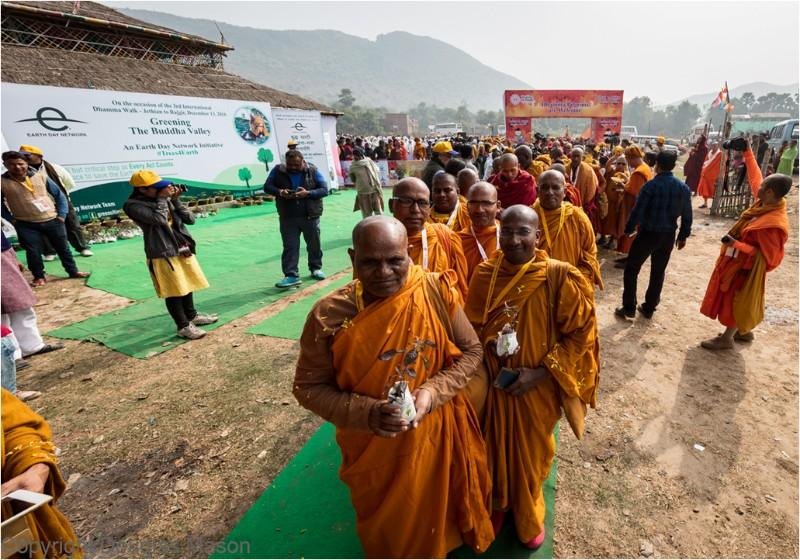
Buddhist monks at a tree-planting programme — faith sites and green initiatives India

Faith Sites

Faith-based organisations adopting renewable energy, plastic reduction, waste management, organic farming and other environmentally responsible practices. Religious sites already recognised have an estimated outreach of 147.5 million people annually.

Climate Clock assembly with students — climate action organisation in India

Climate Change: Energy, Community and Biodiversity

Our approach brings together energy, community and biodiversity. We promote clean and green energy, foster community-led climate action, champion investment in our planet and support the growth of a green economy. Alongside this, we help protect and restore natural ecosystems, building a more sustainable, resilient and nature-positive future.

Women panchayat leaders at a training session — empowering women for climate resilience in India

Women

We empower women with knowledge, skills and opportunities to strengthen climate resilience, livelihoods and leadership. Our programmes reach women farmers, rural communities and elected panchayat representatives, focusing on climate-smart decisions, renewable energy, financial literacy and management capabilities.

We equip first-time farm managers with practical tools and networks to adopt sustainable agricultural practices and improve income security. Through The Canopy Project, women support mangrove restoration while creating livelihoods and protecting vulnerable ecosystems. Our Women and the Green Economy (WAGE) campaign advances women's leadership and governance in the transition to a greener, more inclusive economy.

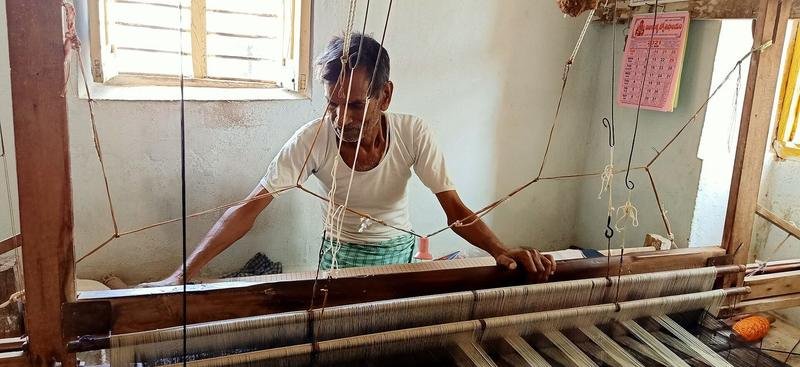
Saree weaving on a handloom — sustainable fashion in India

Sustainable Fashion

Our sustainable fashion initiatives champion responsible, circular and environmentally conscious choices. We engage young people, entrepreneurs, designers and institutions to rethink how clothes are designed, produced, used and valued. Through innovation, awareness and collaboration, we encourage solutions that reduce waste, conserve resources, limit pollution and lower the fashion sector's environmental footprint.

Partners

Our Partners

Logos of partner organisations of Earth Day Network India

Partner with us